If your first thought upon considering AMD's existing entry-level RDNA 4-based gaming GPU, the , goes something along the lines of less is more, we have good news. AMD has quietly rolled out a new non-XT version with fewer cores, lower clocks and the same measly 8 GB of VRAM. Oh, and that video memory is also slower. Give it up for the plain old, but kind of new, .
If that doesn't w69 slot ทาง เข้า sound like a hugely compelling proposition, perhaps it's not a surprise that AMD may not sell the new RX 9060 direct to gamers, but rather that it's thought to be a graphics card that's mostly if not exclusively intended for PC w69 slot ทางเข้า builders and system integrators, rather than we DIY enthusiasts.
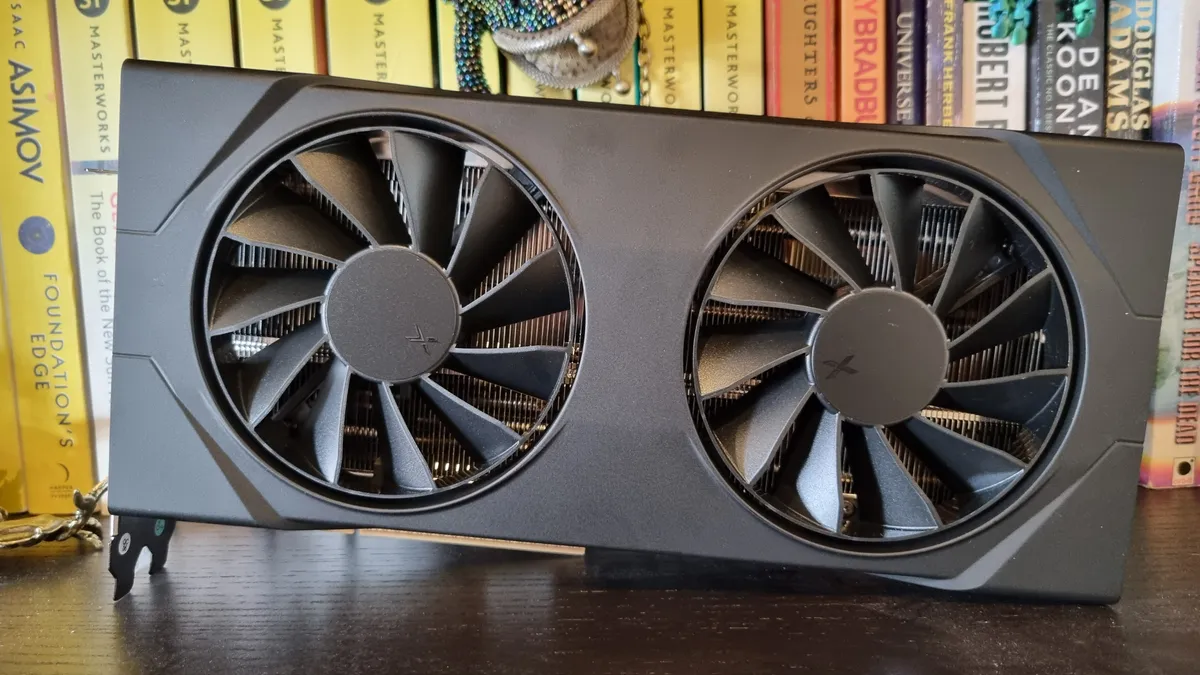
Why AMD doesn't want to quote clock speeds directly isn't clear. But it has given us memory speed. Where the 9060 XT is specified with 20 Gbps GDDR6, the non-XT makes do with 18 Gbps chips. The net result is a reduction in bandwidth from 320 GB/s to 288 GB/s.
All told, the 9060 isn't a major hatchet job. Broadly speaking, you're probably looking at a 15% GPU performance drop versus the existing 9060 XT 8GB. But, as ever, the issue is that 8 GB of VRAM, which is proving an increasing limitation, even at the 1080p resolution at which AMD seems to be pitching this GPU.
Notably, AMD has provided some performance numbers at "Native 1080p Ultra Settings", including 108 FPS in Assassin's Creed Mirage, 98 FPS for Call of Duty: Black Ops 6, 153 FPS in DOOM Eternal (RT) and 67 FPS for . The doesn't have comparable numbers.
However, , the difference being AMD has gone with 1440p performance for that GPU. That's the impact the upgrade from 8 GB to 16 GB makes, it seems.
Whatever, the 9060 XT 8 GB current has a $299 MSRP, so this non-XT model will presumably come in below that. However, it remains to be seen if it will be offered as a direct buy for DIY gamers and if so at what price level.
👉👈
1. Best overall:
2. Best value:
3. Best budget:
4. Best mid-range:
5. Best high-end: